Sea Otter Facts
A sea otter can dive to the seafloor for a clam, float on its back to eat it, and use a stone to crack it open. This Pacific coastal mammal is one of several kinds of otter. Its life at sea makes it a useful contrast with otters that spend much of their time along rivers.
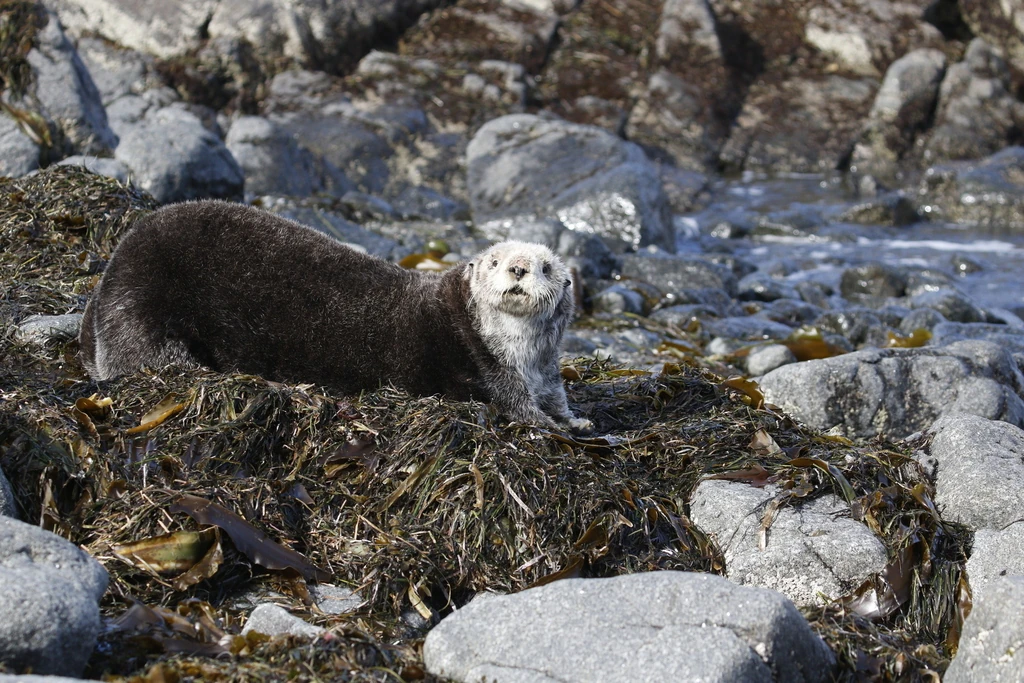
| Scientific name | Enhydra lutris |
|---|---|
| Animal group | Mammals |
| Family | Mustelidae (weasels, otters, and relatives) |
| Length | Up to about 1.2 m (4 ft) in the southern sea otter profile |
| Weight | Up to about 32 kg (70 lb) in the southern profile; northern animals can be heavier |
| Lifespan | Estimated 10–15 years for males and 15–20 years for females in the wild |
| Diet | Marine invertebrates, including crabs, clams, mussels, and urchins |
| Habitat | Shallow North Pacific coastal waters, including kelp forests and estuaries |
| Conservation | Endangered globally on the IUCN Red List |
What does a sea otter look like?
The sea otter has a broad face with stiff whiskers, small rounded ears, and dense fur. Its front paws are short and can handle food closely. The hind feet are larger and webbed, which makes them effective for swimming. From the side, the shape of the hind feet is one of the details that helps distinguish a sea otter’s outline from that of many other mammals.
Sea otters rely on air trapped in their fur to help keep warm in cold water. They spend time grooming to keep that layer working. This helps explain why a video of a floating otter often shows rubbing, rolling, or working its paws through its coat. The fur is central to insulation, not simply a surface color.
Where do sea otters live?
Sea otters live along parts of the North Pacific coast, on both the North American and Asian sides. Their range includes parts of California, the Pacific Northwest, Alaska, Russia, and northern Japan. The range is broken up into populations, so a coastline map with one continuous shaded band can be misleading.
They use shallow habitats such as kelp forests, rocky nearshore waters, and estuaries. An estuary is where freshwater and seawater meet. The best places offer prey within diving reach and water where an otter can spend time grooming and resting. A place can be suitable even if it has no kelp forest, as some estuary populations show.
What do sea otters eat?
Sea otters dive for bottom-dwelling prey such as sea urchins, crabs, snails, mussels, and clams. Some northern sea otters also eat fish. Sensitive whiskers and paws help locate food. Individuals can specialize in different prey, so two otters feeding in the same area may bring different things to the surface.
An otter can use a rock as a tool to open hard-shelled food. Watch what happens after the dive: the animal may roll onto its back, hold the food above the water, and strike or pry it open. It does not need a stone for every meal. The tool is useful when the prey is hard to open with paws and teeth alone.
Sea otter pups and how they learn
A mother usually raises one pup at a time. A young pup has a very buoyant coat and spends much of its early life at the surface. Its mother grooms it, nurses it, and has to leave it floating while she dives for food.
As a pup grows, it learns to groom, swim, and find prey. Those skills are important enough that Monterey Bay Aquarium has paired some orphaned pups with surrogate sea otter mothers during rehabilitation. A young otter can grow large before it becomes an independent forager. Adult lifespan estimates are also different for males and females and vary across populations.
Are sea otters endangered?
The IUCN lists the species as Endangered. Sea otters were heavily hunted for their fur and have recovered in some parts of their range. Recovery varies by population. Oil can damage the insulating function of their coat, and a spill can threaten many animals in a small area.
In some kelp forests, sea otters eat enough urchins to reduce grazing on kelp. That can help the kelp persist and provide habitat for other species. The relationship is easier to understand as a chain: otters eat urchins, urchins graze kelp, and changing one link can affect the other two. The strength of the effect varies by place.
Sea Otter fun facts
- A sea otter can eat a meal while floating on its back.
- Air trapped in its groomed fur helps insulate it from cold seawater.
- The hind feet are broad and webbed, while the front paws grasp food.
- Some individuals use stones to open prey with hard shells.
- Very young pups float easily because of their coat.
- Eating sea urchins can help support kelp forests in some habitats.
How to draw a sea otter
- Draw a long body with a smaller rounded head. In the shore photo, make the back follow the slope of the rocks.
- Place the eyes and dark nose inside a broad pale face. Keep the ears small enough that the head still looks rounded.
- Use a few outward strokes for the whiskers. If you are drawing a swimming pose, make the hind feet broader than the front paws.
- Group the coat into a few dark and light areas before adding texture. In the rocky setting, keep a clear edge around the face.
Sea Otter quiz for kids
What can a sea otter use to open a hard shell?
A stone, used as a tool to help break the shell.
What animal do sea otters eat that also grazes on kelp?
Sea urchins.
Which part of a sea otter helps trap an insulating layer of air?
Its thick, well-groomed fur.
Frequently asked questions
Is every otter a sea otter?
Sea otters are one species, Enhydra lutris. Other otters, such as river otters, have different ranges and ways of living.
Do sea otters eat only sea urchins?
They eat a variety of animals, including clams, mussels, crabs, and snails. Some northern sea otters eat fish as well.
Why do sea otters spend so much time grooming?
Grooming helps keep air in the fur. That air provides insulation when the otter is in cold water.
Where do sea otters raise their pups?
They usually care for pups at the surface in their coastal habitat. The mother nurses and grooms the pup while it develops skills for living at sea.
Can you find sea otters outside California?
Yes. Other populations occur along parts of the North Pacific coast, including Alaska and the coasts of Russia and northern Japan.
Sources
- Monterey Bay Aquarium — Sea otter natural history and recovery
- U.S. Fish and Wildlife Service — Sea otter reintroduction assessment
- IUCN Red List — Sea otter assessment
View catalog data and filter classifications · View photo attribution
Related animals
- American mink Neogale vison
- Least weasel Mustela nivalis
- Platypus Ornithorhynchus anatinus
- Eurasian beaver Castor fiber